 Lake Tahoe Snowmobile Tour
What to Wear Snowmobiling in Lake Tahoe
Wondering what to wear snowmobiling at Lake Tahoe? The short version is that the helmet comes free with every tour, and the rest is a layer system: a wicking base layer, an insulating mid layer, and a waterproof shell over boots and gloves. If you do not own snow gear, the Zephyr Cove check-in rents every missing piece on site for $12 an item. This guide walks through the layers piece by piece, gives the temperatures you will actually ride in at trailhead elevation, and lists what to leave in the car. For the rides themselves, compare Lake Tahoe snowmobile tours on the homepage before you book, and it sits alongside how it compares with the other Tahoe snowmobile rides.
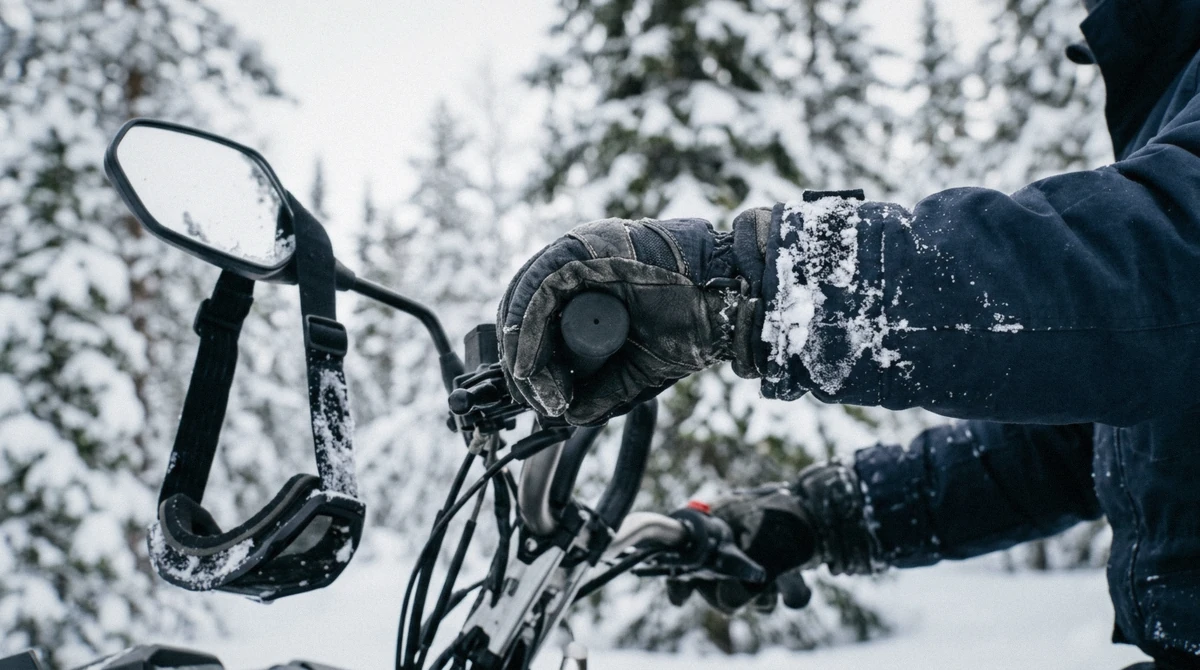
Hands take the wind first. Heated grips help, good gloves help more.
Quick answer The helmet is free, the rest is a layer system or $12 an item
For snowmobiling at Lake Tahoe wear three layers: a synthetic or wool base layer, a fleece or wool mid layer, and a waterproof jacket and bibs as the shell, with insulated boots, waterproof gloves, goggles and a face cover. The DOT-certified helmet is included with every tour at no extra charge. If you do not own snow gear, bibs, jackets, boots and gloves rent at the Zephyr Cove check-in for $12 each.
Key takeaways
- See exactly what the operator supplies and what rents on site in the gear and rental section.
- Ride in the Lakeview tour from Zephyr Cove and the ride starts at the resort itself, so you can change in a warm building.
- Check the month-by-month trailhead temperatures in the temperature table before you pick a departure time.
- New to riding? Read the beginner's guide for the rules on who drives.
What The Operator Supplies And What Rents On Site
Snow gear is not in the tour price. The helmet is. Here is the exact split, with the rental prices as published.
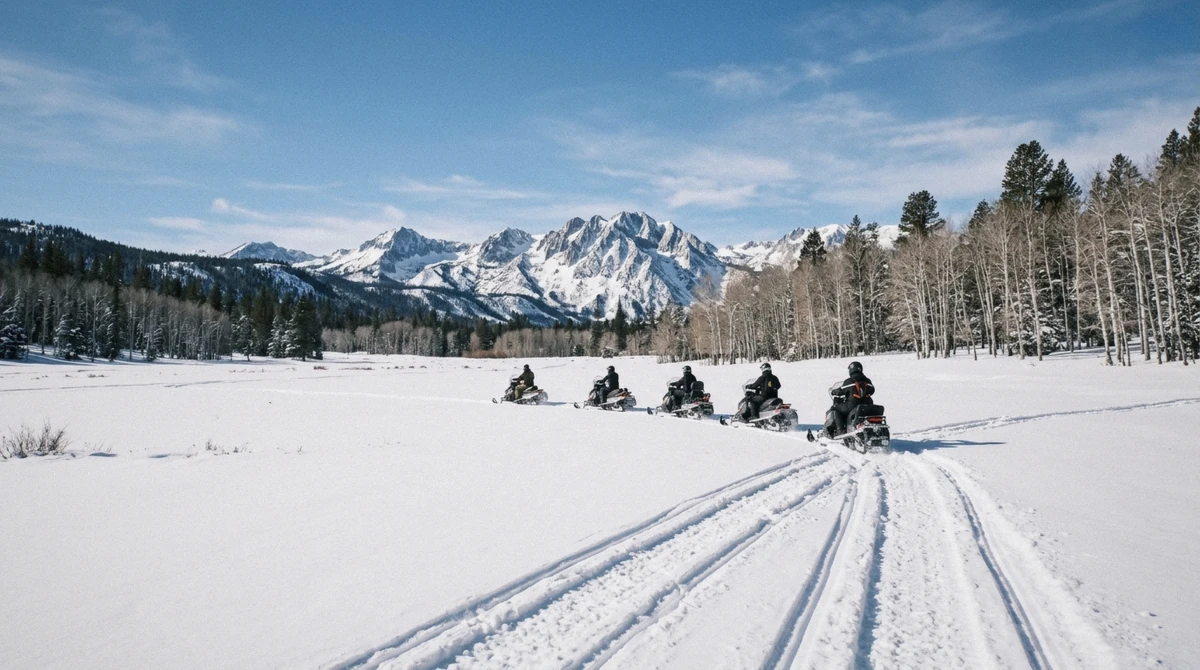
A guided group crossing a meadow in Hope Valley, south of Lake Tahoe.
The Helmet Is Included With Every Tour
Every Zephyr Cove tour includes a DOT-certified helmet at no extra charge, along with the snowmobile and the guide. The same applies to the Hope Valley Summit tour on the California side of the ride: helmet included, everything else is yours to arrange. The helmet is the one item you should not bring from home or improvise. Wear a thin beanie or balaclava under it for warmth, and tell staff at the check-in if the fit feels wrong, because a loose helmet in cold wind at 8,300 ft makes a two-hour ride miserable.
Drivers need to bring one document as well as clothing: a driver's licence or government-issued ID, since drivers must be 16 or older with proof of age. Riders under 18 need written parental or guardian consent.
Gear Rental Prices, Item By Item
Bibs, jackets, snow boots and gloves all rent on site. The per-item price is $12 for each of the four items on both sources. The package price is where the two sources disagree: the Hope Valley Summit tour listing shows $40 for the bundle, while the Zephyr Cove Resort gear rental page shows $45 for the complete package.
That is a conflict between the listing and the resort page, so ask at the counter which price applies that day before you commit. Even at the higher figure, renting the full kit costs $45 on top of a sled that books from $254.40 per rider, so it is a small add-on rather than a hidden cost. The table below puts both published prices side by side.
Rental Prices Compared
This table lists every published gear rental figure from the two sources: the Zephyr Cove Resort clothing and gear rental page and the Hope Valley Summit tour listing. The per-item prices agree. The package price does not, and both figures are shown so you can budget for either.
Both are the operator's own figures.
| Item | Resort gear page | Hope Valley tour listing |
|---|---|---|
| Jacket | $12 | $12 |
| Bibs | $12 | $12 |
| Snow boots | $12 | $12 |
| Gloves | $12 | $12 |
| Package | $45 (jacket, bibs, gloves, boots) | $40 (listed as a package of all three) |
What The Reno Package Includes
The Sierra snowmobiling package from Reno handles gear differently: the listing says the operator helps with gear or rental needs, and no gear pricing is stated. If you book that four-hour package, confirm by phone what is included and what you pay on the day. The listing does state that the tour operates in all weather conditions, which makes proper clothing non-negotiable rather than optional.
Gratuities are not included, and the booking is non-refundable, so ask the gear questions before you pay, not at the pickup. The listing's price bands start at age 7, and the operator provides pickup at any local Reno hotel.
Sources: Zephyr Cove Resort gear rentals and the Hope Valley Summit tour listing.
The Layer System From Base To Shell
Snowmobile clothing works like ski clothing with one difference: wind chill at trail speed is far higher, so the windproof outer layer matters more than raw insulation.
Base Layer: Wicking, Never Cotton
The base layer sits against your skin for four to five hours from check-in to return, so it has one job: move sweat off your body. Synthetic thermal tops and leggings or merino wool both work. Cotton stays wet, and wet fabric at 19 degrees Fahrenheit, the average January low near Hope Valley, pulls heat out of you fast.
Riders who show up in a cotton hoodie under a rental jacket are the ones who get cold by the first scenic stop. If you own long johns or running tights, wear them under your trousers even in the shoulder season, because the rental bibs are warm but not a substitute for a base. One thin pair of socks made of wool or a synthetic blend under the rental boots beats two thick cotton pairs, which compress and hold moisture.
Mid Layer: Fleece Or Wool
The mid layer is your thermostat. A fleece jacket or a wool sweater over the base layer covers most riders down to the low twenties, and you can vent by opening the shell jacket at a stop if you overheat. Driving a sled is more physical than sitting in a chairlift, because you steer with your arms and shift your weight, so many first-time riders run warmer than they expect for the first half hour.
Do not let that fool you into shedding the mid layer before the ride. The average high near the Hope Valley trailhead in January is just 36 degrees Fahrenheit, and standing still at a viewpoint with the engine off is when the cold catches up. Bring the mid layer even if you think you will not wear it.
It packs small, and an extra pound on a 450-lb-capacity double sled is nothing.
Shell: Waterproof Jacket And Bibs
The shell is the piece you cannot improvise. At riding speed on an open trail, any knit fabric leaks wind straight through, so you need a waterproof, windproof jacket and pants or bibs. This is exactly what the $12 rental covers if you do not own ski gear.
Ski or snowboard jackets and bibs work perfectly and are what most riders bring. Jeans under a rental jacket are the classic mistake: denim soaks up snow melt and then freezes stiff. If you own only one piece of proper snow clothing, make it the pants or bibs, because your lower body takes the thrown snow and sits in the wind stream the whole ride.
The jacket needs a hood that stows flat, or no hood at all, since a flapping hood under a helmet is a distraction.
What to Wear Snowmobiling on Video
A tour outfitter walks through the layers, top to bottom. Third-party video by Sage Outdoor Adventures. We did not shoot it and have no relationship with the creator.
Boots, Gloves, Goggles And Face Cover
Hands, feet and face are where a ride is won or lost. These are the pieces to prioritize if you are buying rather than renting.
Boots And Socks
Insulated, waterproof winter boots with a lug sole are ideal. Ski boots do not work, and neither do running shoes, which the wind cuts straight through. The rental boots at the Zephyr Cove counter are insulated and sized to wear over one or two socks, so bring your thinnest wool pair.
Your feet stay fairly warm while riding because they sit low behind the wind screen, but they cool fast at stops. If your own boots are rated for around 20 degrees Fahrenheit and above, they will do for the shoulder months of November and April, when the average high near Zephyr Cove is still 47 degrees Fahrenheit in November. In January, when the average low near the trailhead is 19 degrees Fahrenheit, rent the boots if your own pair is a fashion boot rather than a snow boot.
Gloves
Your hands grip the handlebars in the wind stream for two hours straight, so gloves are the single most important rental item if your own pair is not up to it. Thin knit gloves and touchscreen gloves are useless here. You want waterproof insulated ski gloves or mittens.
The $12 rental gloves at the check-in exist because so many Tahoe visitors arrive with ski-trip gloves that turn out to be liners. A good trick if your gloves are marginal: bring a thin liner glove to wear underneath, which also lets you pull the outer glove off for photos without bare skin.
Goggles And Face Cover
The helmet is included but eye protection and face cover are not, and at trail speed the difference between a visor and squinting into wind-driven snow decides if you see the view. Ski goggles are the right tool and ski sunglasses are the minimum. The Lakeview tour climbs to viewpoints near 9,000 ft above the lake, where glare off the snow is severe even on a hazy day.
A neck gaiter or balaclava that pulls up over your nose and cheeks costs a few dollars and does more for comfort than any other small item. It also doubles as the layer between your skin and the shared helmet. Buff-style tubes, a balaclava, or a simple fleece neck warmer all work, and they fit in a pocket when you warm up.
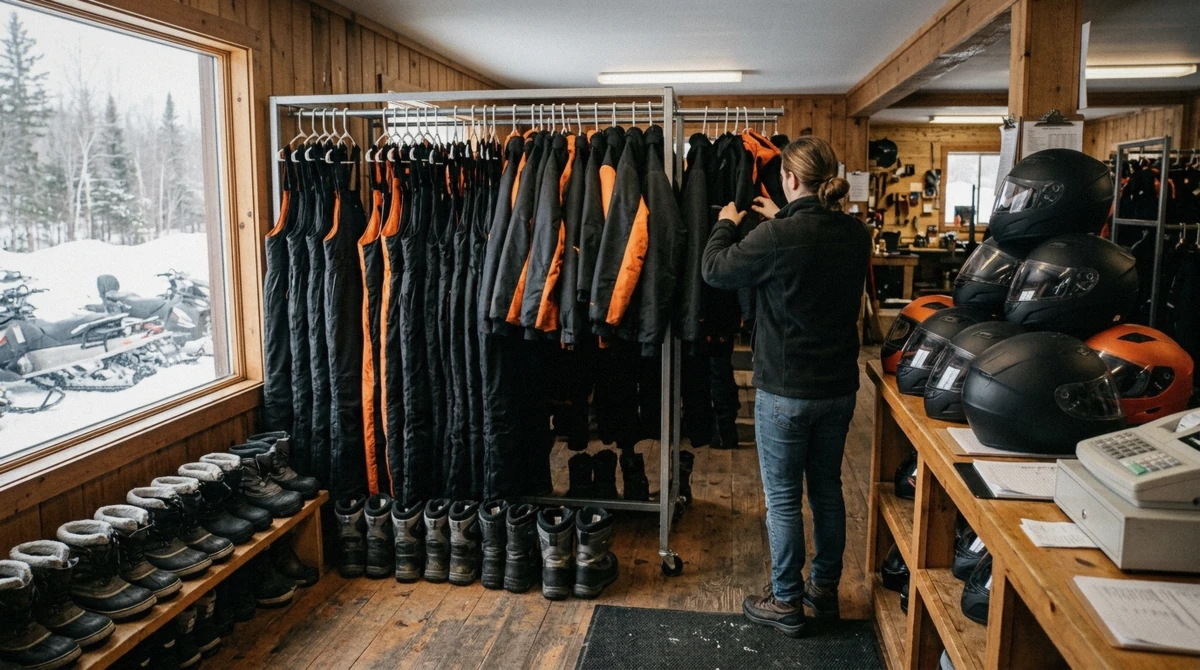
Snow gear rents on site at the tour centre, priced per item or as a package.
How Cold You Will Actually Be
Dress for the trailhead, not for the resort. The ride areas sit higher and colder than the towns where you slept.
Elevation Makes The Difference
The Hope Valley Summit tour starts at a 7,200 ft trailhead and climbs to 8,300 ft, and the Lakeview tour rides to peaks near 9,000 ft. Temperatures drop as you climb, so the numbers below, taken from the ERA5 climate record at points near the ride areas, are what your clothing has to handle. Winter rides run roughly from December to early April when the snow holds, and tours can be canceled for weather, so the months that matter are December through April.
Averages from the ERA5 climate record cover 2016 through 2025 and are grid averages, so treat them as typical conditions rather than a forecast for your date.
Month-By-Month Temperatures At Ride Elevation
This table compares average daily highs and lows for the two ride bases across the snowmobile season, from the ERA5 climate record averaged over 2016 through 2025. The Hope Valley point sits near the 7,200 ft trailhead and runs colder than Zephyr Cove, which sits lower on the Nevada shore.
| Month | Hope Valley high | Hope Valley low | Zephyr Cove high | Zephyr Cove low |
|---|---|---|---|---|
| December | 38°F (3.1°C) | 20°F (-6.8°C) | 39°F (3.9°C) | 24°F (-4.7°C) |
| January | 36°F (2.2°C) | 19°F (-7.4°C) | 37°F (2.7°C) | 22°F (-5.6°C) |
| February | 37°F (2.5°C) | 18°F (-8.0°C) | 39°F (3.7°C) | 22°F (-5.5°C) |
| March | 39°F (3.8°C) | 21°F (-6.2°C) | 41°F (5.1°C) | 24°F (-4.2°C) |
| April | 48°F (8.7°C) | 26°F (-3.4°C) | 51°F (10.5°C) | 30°F (-0.9°C) |
Sources: Open-Meteo ERA5 historical climate data for both points.
Sun, Skin And The Small Items
Cold is only half the weather equation. At 8,000 ft, sun exposure is a real risk even on the coldest day of the ride.
Sunscreen Is Part Of The Kit
Sunscreen is on the tour listing's own packing list, and for good reason. Ultraviolet exposure increases with elevation, and snow reflects a large share of the sun back up at your face and under your chin. A two-hour ride to an 8,300 ft viewpoint in Hope Valley delivers more UV to exposed skin than a full day at sea level.
Put a high-SPF sunscreen on your face before you leave the hotel and carry a small stick or tube to reapply at the scenic stops. Lip balm with SPF matters just as much, because lips chap fast in dry mountain air moving at trail speed. Skiers know this drill already, and snowmobiling demands the same routine even though you arrive by sled rather than by chairlift.
Small Things That Earn Their Pocket Space
Beyond sunscreen and lip balm, a few small items make the ride better. Hand warmers, the air-activated kind, slip inside rental gloves and cost little. Tissues or a small pack of wipes, because runny noses are universal in cold dry air and you cannot blow your nose inside a helmet at speed.
Sunglasses for the shuttle and the check-in wait, when the goggles are off. A spare hair tie for anyone with long hair, since hair under a helmet gets uncomfortable. Water in a soft bottle, because the dry air dehydrates you even in the cold.
Dressing For The Shuttle And The Check-In Wait
A lot of your day is not on the sled. Plan clothing for the waiting too.
Long Lead Times Mean Standing Around
The Hope Valley Summit tour asks you to arrive at Zephyr Cove Resort 2 hours 15 minutes before departure for sign-up, suit-up and the shuttle ride to the trailhead, and the whole outing runs roughly 4.5 to 5 hours. The Lakeview tour is simpler: arrive 1 hour before departure at the resort, with no shuttle leg. Dress so that you are comfortable standing in a resort lobby and, for the Hope Valley tour, riding a shuttle in winter road conditions.
Wear your full layers from the start rather than changing at the last minute, because the resort is a working building and finding a changing spot in a rush is nobody's idea of a warm-up. Free parking and a free shuttle from the resort are both stated on the operator's FAQ.
What To Bring And What To Leave Behind
A short list before you pack. The rule of thumb is that everything you bring rides either in a closed pocket or in the car.
Do
- Do wear a wicking base layer under the rental bibs, because the rentals are shells and insulation, not a full outfit on their own.
- Do bring your licence or a government ID, since drivers must be 16 or older with proof of age and riders under 18 need written parental consent.
- Do put sunscreen and SPF lip balm on before the ride, because UV at 8,300 ft and snow glare will burn exposed skin on a bright day.
- Do rent the full $45 package at the counter if you own no snow gear, since four items bought separately would cost $48.
- Do carry hand warmers and tissues in a zipped chest pocket, because you cannot open a backpack mid-trail.
Don't
- Don't wear cotton hoodies, jeans or fashion boots, because wet cotton freezes and denim soaks up snow melt on a two-hour ride.
- Don't bring your own ski or bike helmet, because a DOT-certified helmet is included with every tour at no charge and staff will fit it.
- Don't carry a loose bag or scarf, because anything unsecured can catch wind or tangle in the sled at trail speed.
- Don't forget the check-in lead time, since the Hope Valley tour wants you at Zephyr Cove Resort 2 hours 15 minutes early and late arrivals can miss the shuttle.
- Don't overdress for the early shuttle and underdress for the ride: dress for the trailhead lows, which average 19 degrees Fahrenheit at Hope Valley in January.
Clothing Questions, Answered
What do people actually wear on a Tahoe snowmobile tour?
The typical outfit is a thermal base layer, a fleece mid layer, and a waterproof ski jacket and bibs, with insulated boots, ski gloves, goggles and a neck gaiter, topped with the DOT helmet included in the tour. See the layer system for each piece in order.
Can I show up without buying snow gear first?
Yes. Bibs, jackets, boots and gloves rent at the Zephyr Cove check-in for $12 each, and the complete package is $45 per the resort's rental page, though the tour listing shows $40 for the same bundle. The details are in the gear rental section.
Do I need goggles if the helmet is provided?
Yes, the included helmet protects your head but eye protection is on you, and ski goggles are the right choice because trail speeds push wind and snow into unprotected eyes. Face cover advice is in the goggles and face cover section.
How should I dress a child for a ride as a passenger?
Children ride as passengers from age 5 on a double sled and get colder than drivers because they do not work the controls, so give them one more layer than an adult would wear and check that the rental bibs and boots are snug at the cuffs. Rules on ages and weight are covered in the beginner's guide.
Is sunscreen really necessary in the snow?
Yes, sunscreen is on the tour listing's own packing list, because UV rises with elevation and snow reflects light back at your face on a ride to nearly 9,000 ft. The details are in the sun section.
What should I wear for the shuttle ride to the trailhead?
Wear your full riding layers from check-in onward, because the Hope Valley tour gives you 2 hours 15 minutes of sign-up, suit-up and shuttle before you reach the 7,200 ft trailhead, and the shuttle runs in winter road conditions. The timing is explained in the shuttle and check-in section.
What should I leave in the car rather than carry?
Leave loose scarves, open bags and anything you would hate to lose on the trail, because pockets are the only storage on a sled and unsecured items can catch the wind. The full list is in the dos and don'ts.